Same Problem, Different Kitchen
Field Notes — Post 0

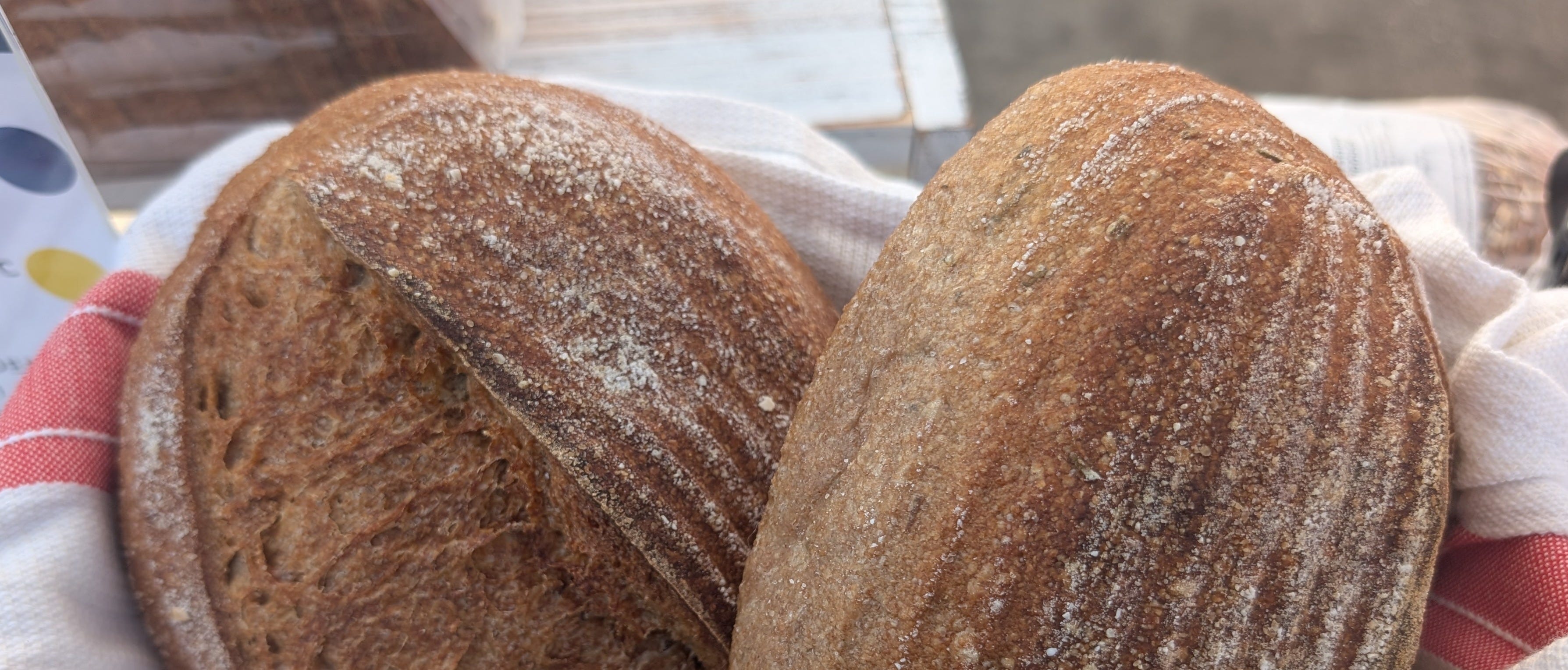
Since leaving my role at First American last year, I’ve been running two things simultaneously: a fractional design practice and a grain-forward bakery.
When I mention both in the same breath, people do a quick sort. One is the career, one is the hobby. One is strategic, one is operational. One is digital, one is physical. One is serious, one is charming.
That framing is wrong.
These two businesses are not unrelated. They are the same problem expressed in different contexts. And operating both at the same time — with real stakes, real constraints, and no safety net — has made me better at each of them in ways I didn’t expect.
That’s what this series is about.
Three things I keep learning in both places.
1. Knowing your customer is not a research exercise.
I’ve spent 15 years helping product teams answer the question of who they’re building for. I thought I understood what that meant.
Here’s a story that humbled me.
We built a new feature based on what a competitor was doing and anecdotal feedback from the field. We did our research. We formed hypotheses. We spent six months designing and building something genuinely better — cleaner, faster, more capable. When it launched, users went back to the old version. The clunkier one. The one we were replacing.
It took us a while to understand why. It wasn’t a usability problem. It wasn’t that users didn’t see the improvement. It was that they were operating in high-stakes situations with their clients, and the old version was the one they trusted. Not because it was better. Because it was familiar and had their trust. That’s not something a research study catches. It shows up in behavior, after the fact, when the cost of being wrong is already real.
Six months. Real opportunity cost. Delivered to users who needed to feel safe more than they needed a better interface.
I watched the same thing happen to me at the farmers market, in a single morning.
I sell two similar loaves — same format, different grains, different texture. I can explain the difference clearly: the flour, the fermentation, the crumb. I did explain it, every week. Customers looked confused. Not uninterested, but confused. Why are there two? Which one is right for me?
I was explaining features. They were making a trust decision. They wanted to know which one to bring to dinner, which one wouldn’t be a gamble, which one was the safe choice. The job wasn’t to understand the difference. The job was to not make a mistake.
My sales pitch was answering a question nobody was asking.
The feedback loop is different. One plays out over months and costs a team’s worth of runway. The other plays out in thirty seconds across a folding table. But the failure is identical — we assumed we knew what the customer needed to hear, and missed what they needed to feel.
2. You can’t design your way out of a broken operation
A bakery is a designed system. As a customer experience and as an operation. Even at micro scale, every decision about flow, station layout, product selection, timing, and margin per item compounds. You can’t fix what the customer experiences without fixing the system behind it.
The same is true in product. The experience a user has with a piece of software is not just a function of what the designers drew. It’s downstream of how the team is organized, how priorities get set, how decisions get made, and where attention goes. A beautiful interface sitting on top of a broken operating model is still a broken product.
In both cases, the visible output is just the surface. The real design work is invisible.
3. Focus is not a virtue. It’s a survival mechanism.
Both contexts punish diffusion. Too many menu items, too many features, too many customer segments — the result is the same: diluted effort, unclear value, slower growth.
I say this from lived experience. Every few weeks I want to add something new to the menu. A new loaf. A seasonal item. Something I saw that looked interesting. The instinct feels generative. In practice, it fragments attention, complicates production, and muddies what the bakery actually stands for.
I’ve watched the same pattern play out on product teams under growth pressure. The list of things that “should” get design attention expands faster than the team’s capacity to do any of them well. Everything becomes a priority. Nothing does.
You’ve probably seen a diner menu with 100+ options. You know the feeling. The slight overwhelm, the choice paralysis, the vague suspicion that nothing on it will be great. That’s what happens to a product when focus breaks down. The customer feels it before anyone on the team names it.
So this is Field Notes.
Observations from operating in both. What I learn in one shows up in the other. That’s the lens.
If you’re building a product team under real constraints, or running a small food business and tired of advice that doesn’t quite fit — this is written for you.
Dima Todorova-Lilavois is a fractional product design leader and the operator of a grain-forward bakery in Long Beach, CA. Field Notes publishes when there’s something worth saying.
Thanks Dima for this wonderful parallel that you have created here. Super insightful also. Excited to see what else you write about!
The feeling of safety in a choice. Trust. Especially when the stakes are higher. That’s the real customer journey. Everything else supports it. Great post, Dima, and very insightful!